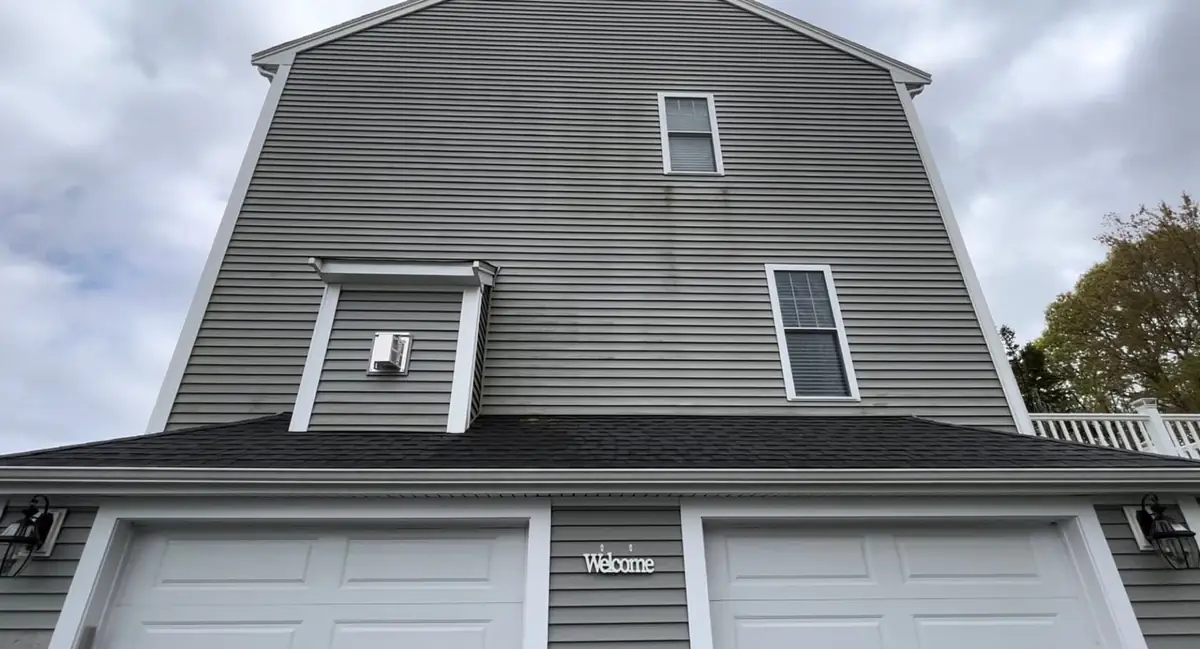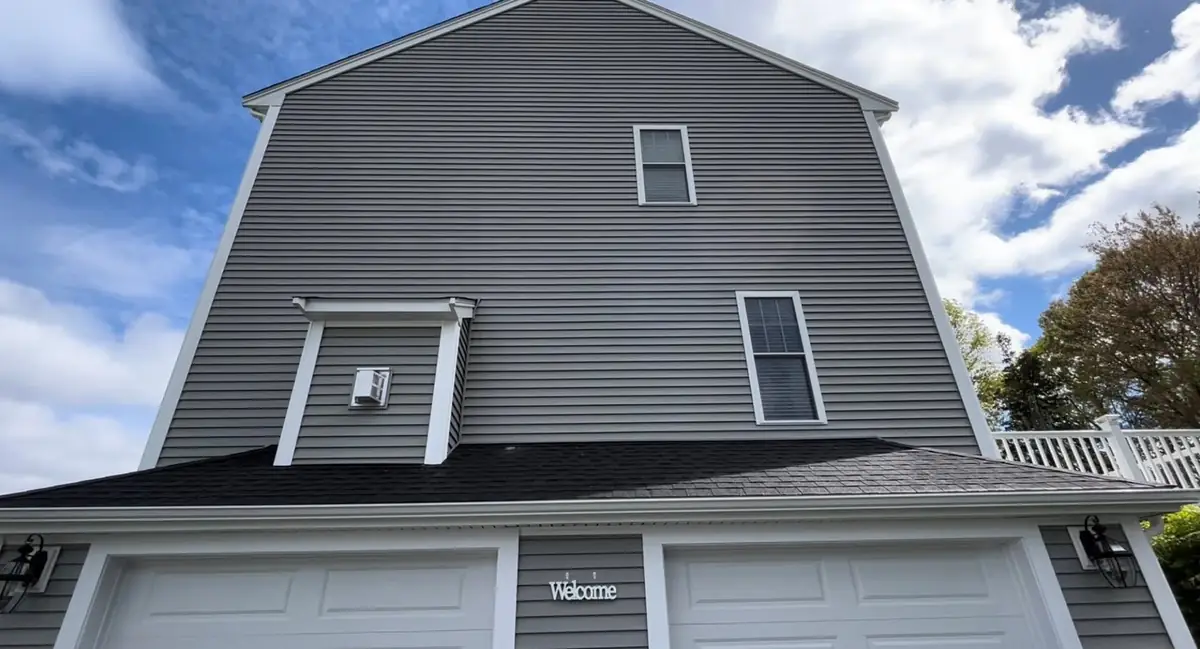
What soft washing cleans
- Vinyl siding: the most common surface we're asked about
- Green algae and mildew, especially on shaded, north-facing walls
- Spring pollen film and summer dust
- Cobwebs and grime under eaves, soffits and around light fixtures
- Dirt splash along the bottom courses near garden beds
- Trim, shutters and other exterior surfaces. Ask about yours.
Why soft washing instead of high pressure?
Vinyl siding is built to shed rain. It isn't built to take a narrow, high-pressure stream. Too much pressure can force water up behind the panels, scuff the finish, or loosen pieces that are already tired. Most of what makes siding look dirty in New England is organic growth like algae and mildew. Pressure alone tends to knock the surface layer off and leave the roots behind, so the green comes back quickly.
Soft washing turns that around. A cleaning solution goes on at low pressure and is given time to break down the growth and grime. Then the surface is rinsed gently. The result is a clean wall without the risk that comes with blasting it.
Contact us to schedule a cleaning! Free quotes. Text photos for the fastest answer.
Free QuoteText 508-838-3832Why New England siding gets dirty so fast
Our weather is hard on siding. Spring brings heavy pollen that sticks to every surface. Humid summers and shady, tree-lined lots give mildew and algae what they need to grow, which is why the north and shaded sides of a house usually turn green first. Winter adds freeze-thaw cycles and road-salt spray along the street side. A wash once every year or two keeps that buildup from getting ahead of you.
How a house wash works with us
- Quote: call, text or send the form. Photos of each side of the house help a lot.
- Plan: we talk through the surfaces, any trouble spots, and plants or areas you want protected.
- Wash: soft wash application, dwell time, then a gentle rinse from top to bottom.
- Walk-around: we look it over together so you're happy with the result.